
Criminal Court Records in Pulaski County
A Pulaski County criminal court record is the court case file, not just the arrest sheet. In felony matters, the record is tied to Superior Court in the Oconee Judicial Circuit and is kept through the Pulaski County Clerk of Superior Court. The file can include an indictment or accusation, charging papers, arraignment notes, plea papers, motions, court orders, bond entries, disposition, sentence, probation conditions, and any appeal entries. The charge may start as a booking or warrant entry, but the court record is where that charge is tested, amended, dismissed, pled, tried, or sentenced.
Pulaski County uses several court levels. Superior Court is the main criminal trial court for felony cases and broad criminal case files. Magistrate Court is important for warrant applications and some lower-court matters. Hawkinsville Municipal Court handles non-jury municipal ordinance cases and citations. Juvenile records are managed through the Clerk of Superior Court according to the clerk profile, but juvenile access is restricted compared with adult criminal court records. For the arrest-side charge list, use the Pulaski jail roster and the separate Pulaski County arrest records and charges page. For the complete filed case, use the court record path.
The Prosecuting Attorneys' Council of Georgia profile lists Timothy Vaughn as District Attorney for the Oconee Judicial Circuit. The DA's office is the prosecution route for felony charging decisions and many post-arrest questions, but it is not the custodian for certified court copies. The clerk holds the Pulaski case file and is the practical fallback when PeachCourt does not show the needed document.
How to Search Pulaski County Criminal Court Records
The official Georgia Courts e-access directory lists Pulaski Superior through PeachCourt. The directory states that users are sent to a provider website and must have an account to search court records. That makes PeachCourt account access the online starting point for Superior Court criminal case records where a public case is available through the provider. It should not be treated as a free anonymous county search box.
- Start with the Georgia Courts e-access directory and locate Pulaski Superior in the participating court list.
- Open the PeachCourt provider link and register or sign in before searching court records.
- Use the account-gated search tools to look for the Pulaski Superior criminal case. The public access page did not expose all inner search fields without login.
- Read the docket entries, charges, filings, orders, plea or trial result, disposition, and sentence when the case is available.
- Call or visit the Clerk of Superior Court for older files, certified copies, sealed-file questions, or records not visible online.
The clerk fallback matters in Pulaski County because the official sources do not show a local criminal case search portal outside PeachCourt. The Clerk of Superior Court is Michael King, and the courthouse address for Superior Court records is 141 Commerce Street, P.O. Box 60, Hawkinsville, GA 31036. The phone number is (478) 783-1911, and the GSCCCA clerk profile lists office hours as Monday through Friday, 8:00 AM to 5:00 PM. For criminal matters, GSCCCA identifies Genie Williams as handling criminal records along with real estate, UCCs, liens, and plats.
The Georgia Public Defender Council Pulaski County Oconee Circuit listing is relevant when a defendant needs appointed-counsel routing, not a record copy. It lists the Oconee Circuit public defender office in Eastman and names Ashley McLaughlin as circuit public defender. A person reading a criminal court record should keep those roles separate: the DA prosecutes, the public defender represents eligible defendants, and the clerk keeps the court file.
The public defender listing is a useful visual reference for Pulaski County criminal court records because it shows the regional defense office tied to the Oconee Circuit.
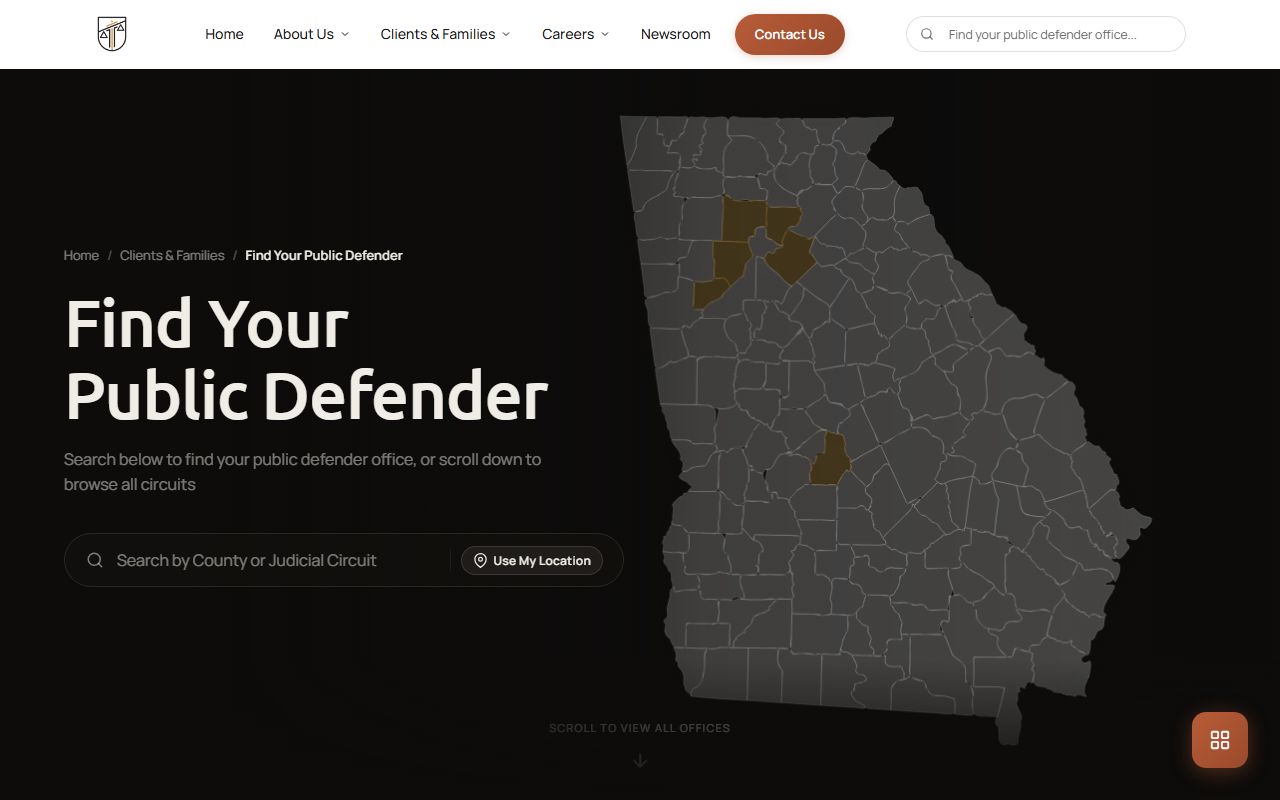
That circuit structure explains why a Pulaski case may be filed locally while prosecutor, defense, or judge contacts point to other Oconee Circuit offices.
Pulaski County Criminal Case Flow
A Pulaski County criminal court record grows as the case moves through the court. A booking record may show the first charge and bond, but the court file shows the legal path after filing. The core flow is: charges filed › arraignment › pretrial and motions › plea or trial › disposition › sentencing. If a case is appealed, transferred, dismissed, or restricted, the docket should show entries tied to that change when the entry is public.
| Stage | What Happens |
|---|---|
| Charges filed | The accusation, indictment, warrant-related filing, or other charging paper starts the court-side record. |
| Arraignment | The defendant is advised of the charge and enters a plea such as guilty or not guilty. |
| Pretrial / motions | Parties file motions, orders are entered, bond may be addressed, and hearings or continuances appear on the docket. |
| Plea or trial | The case resolves by plea, trial verdict, dismissal, or another court action. |
| Disposition and sentence | The record shows the outcome and any sentence, probation, cost, fine, or appeal entry that is public. |
The Oconee Circuit context can affect who appears on the file. The Eighth Judicial Administrative District Oconee Circuit page lists Superior Court judges and staff who serve the circuit, including offices in Hawkinsville and Eastman. The Pulaski file stays with the local clerk, even when the assigned judge serves more than one county.
What a Pulaski County Criminal Court Record Shows
Research did not expose the inside PeachCourt criminal search screen without an account, so field claims should stay close to the court-record inventory. A Pulaski criminal file commonly uses court terms such as defendant, state, charge, docket entry, plea, disposition, sentence, bond, motion, order, and probation. Jail roster identifiers such as warrant numbers can help match an arrest to a case, but a warrant number is not always the same as a criminal case number.
| Field | What It Shows |
|---|---|
| Case number | Provider or clerk case identifier for the court file; exact public format was not visible before account login. |
| Court | Superior Court for felony cases, or another Pulaski court if the matter belongs outside Superior Court. |
| Defendant | The person charged in the criminal case. |
| Charges | The filed counts, statutes, descriptions, and felony or misdemeanor level when shown. |
| Docket entries | Chronological filings such as arraignment, motions, orders, hearings, continuances, judgment, or appeal notice. |
| Plea | The defendant's response to the charge, such as guilty or not guilty. |
| Disposition | The current or final result, such as dismissed, pled, tried, or otherwise disposed. |
| Sentence | Confinement, probation, fines, costs, restitution, or other court-ordered terms when public. |
The GBI criminal-history restriction page is also relevant to criminal records because it separates court access from criminal-history dissemination. The GBI record restriction page explains the state-level restriction process for certain arrests and outcomes.
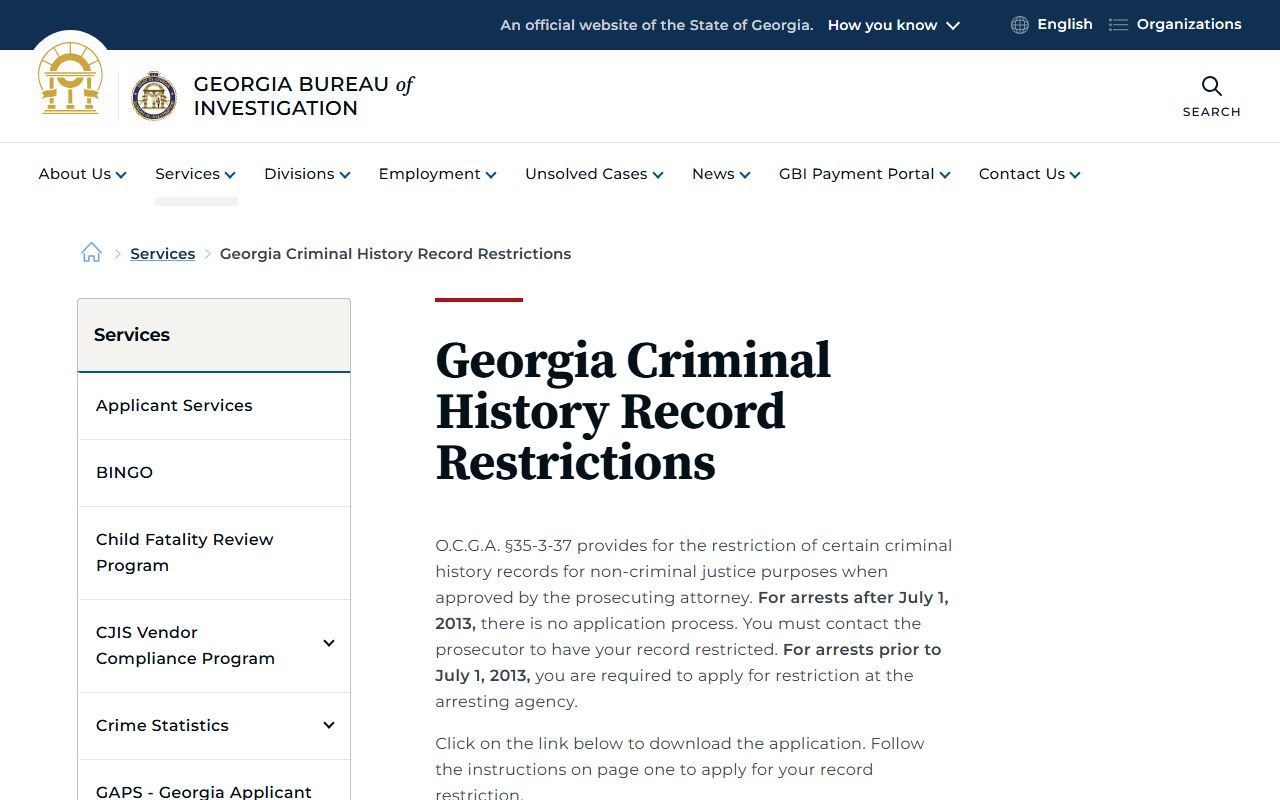
That state process can limit criminal-history access, but it does not automatically erase every public court-file entry.
Pulaski County Charges vs Convictions
A charge is an accusation. A conviction is an outcome. Pulaski County criminal court records may show charges that were later amended, reduced, dropped, dismissed, or resolved by plea. The jail roster can list a charge after arrest with a statute, court, and bond, but that list is not proof of conviction. The court disposition is the key field for outcome.
| Charge | Conviction | |
|---|---|---|
| Meaning | A filed accusation or count. | A guilty plea, guilty verdict, or other conviction entry. |
| Where seen | Booking record, charging paper, indictment, accusation, or docket. | Disposition, judgment, sentence, or DDS/criminal-history report when applicable. |
| May change | Can be amended, reduced, dismissed, or nolle prossed. | Changes only through court action, appeal, correction, or lawful restriction. |
| Record use | Useful for tracking court charges after arrest. | Useful for reading the final result of the criminal court case. |
Read Pulaski County Dispositions
Disposition means the current or final result of a charge or case. In a Pulaski criminal court record, a disposition may show that a charge remains pending, was dismissed, resulted in a plea, ended after trial, or moved to sentencing. A sentence can include confinement, probation, fines, costs, restitution, or other conditions. A probation violation may later appear as a separate charge or docket event if the case returns to court.
Some terms need care. An arraignment is not a trial. A motion is a request for a judge to act. A continuance is a delay. Bond is money or conditions set to secure release and court appearance. A certified copy is the clerk-certified version used for legal proof. If the online entry is unclear, the Clerk of Superior Court is the record custodian for certified copies and file-specific clarification.
The Georgia record restriction statute is useful when reading older charges that may be eligible for limited public access.
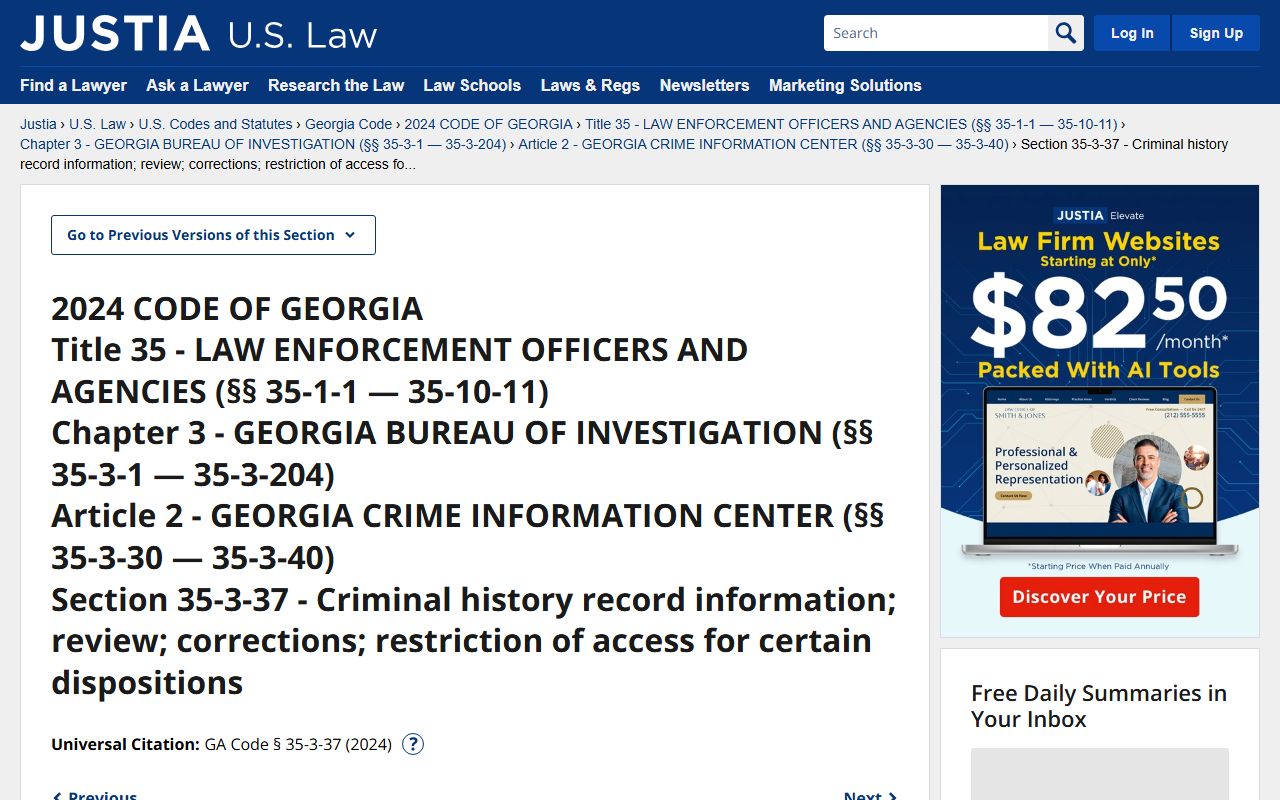
Restriction law is outcome-sensitive, so the disposition and arrest date matter before any restriction route can be assessed.
Sealed vs Restricted Records
Georgia sources use criminal-history record restriction rather than treating every eligible record as destroyed. Sealing and restriction are related, but they are not the same. A sealed court file is limited by a court order or law. A restricted criminal-history record limits access for non-criminal-justice purposes under the GBI process. If the arrest happened after July 1, 2013, the GBI says there is no separate GBI application process and the person should contact the prosecutor. For Pulaski felony or Superior Court matters, that means the Oconee Judicial Circuit District Attorney. For older arrests, the GBI route begins with the arresting agency.
| Sealed court file | Restricted criminal history | |
|---|---|---|
| Source | Court order, court rule, or law. | O.C.G.A. 35-3-37 and GBI/prosecutor/arresting-agency routing. |
| Effect | Public access to the court file or part of it is limited. | Criminal-history access is limited for non-criminal-justice purposes when approved. |
| Route | Ask the court or clerk about the sealing order and Rule 21 process. | Use prosecutor route for post-July 1, 2013 arrests; arresting agency for earlier arrests. |
| Not the same as | Automatic removal from all agency records. | Automatic sealing of every related court document. |
The Uniform Superior Court Rules include Rule 21 on public access and sealing, which matters when a Pulaski criminal file is not open to the public.
Public Access to Criminal Court Records
Pulaski criminal court records are generally public when the case is not sealed, juvenile, restricted, or otherwise protected. Georgia's Open Records Act supports inspection of public agency records, while court files are also governed by court rules and case-specific orders. Superior Court records are public unless access is limited by law or by the court's sealing procedure. Public copies may still redact Social Security numbers, financial account numbers, minor names, victim information, addresses, and sealed exhibits.
Key rules: O.C.G.A. 50-18-70 presumes public records are open unless a law or order limits access. O.C.G.A. 50-18-72 lists exemptions, including records protected by other laws.
For certified criminal case documents, use the clerk rather than a screenshot or roster entry. The U.S. Attorney for the Middle District of Georgia is separate from Pulaski County criminal court records because federal prosecutions are not state Superior Court files.
That distinction helps separate state Pulaski criminal files from federal cases filed in the Middle District of Georgia.
Restricted Criminal Court Records in Pulaski County
Some Pulaski County criminal court records are not open to the general public. Juvenile records are restricted and should not be treated like adult criminal case files. Adoption, mental-health, and involuntary hospitalization records are also restricted. Sealed court files require a court process. Records tied to protected identifiers, victims, minors, or sealed exhibits may be redacted even when the rest of the case is public.
Active investigations and warrant-sensitive details may also be limited. If a search involves a current inmate, the jail roster may show the warrant number, count, statute, description, misdemeanor or felony flag, court, arrest date, agency, days in jail, and bond, but it will not show all court documents or hearing dates. For the full criminal case history, check PeachCourt first and then contact the Clerk of Superior Court.
Note: A restricted criminal-history record and a sealed court file are different, so ask the prosecutor, arresting agency, or clerk which route applies.